Simple Drums Rock - Drum Set
- 4.2
- Rating
- 50.00M
- Installs
- Free
- Price
 Analysis by App-foxy
I opened Simple Drums Rock - Drum Set expecting a quick virtual instrument rather than a full game, and that is exactly where it makes the best first impression. It puts the focus on tapping a drum kit, building a beat, and enjoying the immediate response. There is no long introduction to work through, and the basic idea is easy to understand within moments. For anyone who wants a casual music game that can also support simple rhythm practice, this direct approach is appealing.
The app comes from TPVapps and sits in the music section, although I would describe it more accurately as a playable drum simulator. It is free to start, rated for Everyone, and its broad audience is reflected in its popularity: it has passed 50 million installs and holds a 4.2 average from roughly 116 thousand ratings. Those figures do not automatically make it the right choice for every drummer, but they do suggest that the straightforward format has connected with a large number of casual players.
My overall reaction is that this is best understood as a pocket drum pad with game-like accessibility. It can fill a few spare minutes, help a beginner understand basic coordination, or provide a simple way to tap along with music. It is not a replacement for an acoustic kit, an electronic drum module, or a structured teaching course. The value comes from its immediacy: launch it, place your fingers over the kit, and start making a rhythm.
You May Also Like

 AccuWeather: Weather Radar
AccuWeather Review: A Quick, Clear Forecast for Everyday Decisions
For everyday plans, the best forecast is the one you can understand quickly. AccuWeather makes rain timing, radar, and local conditions easy to act on, with a few trade-offs.

 Hill Climb Racing
Why Hill Climb Racing Still Turns Crashes Into One More Run
A tiny car, a bumpy hill and one more upgrade: Hill Climb Racing keeps resurfacing because its simple chaos makes every near-miss feel personal.

 AliExpress - Shopping App
AliExpress Makes Global Shopping Feel Personal, but Shoppers Bear the Risk
AliExpress turns a global marketplace into a pocket-sized discovery engine. Its reach is useful, its shopping loop compelling, and its trade-offs easy to miss.

 Lords Mobile: Kingdom Wars
Lords Mobile Is a Kingdom-Building Routine, Not a Quick Match
A case-by-case verdict on the building, battles, device demands, and social commitments that make Lords Mobile rewarding for some players and exhausting for others.

 PDF Scanner app - TapScanner
TapScanner Makes Paperwork Easier to Capture, Check, and Share
TapScanner makes scanning with a phone feel less like a rescue operation and more like a dependable step in getting work done. Its capture tools are useful, though not flawless.

 Block Blast!
 Shows How Much a Puzzle Game Can Leave Out
A quiet grid game shows why puzzle players increasingly value instant clarity, repeatable skill and low-pressure play—and where the genre still needs to catch up.
More From Our News Desk
View All News


How the kit creates its own playable mood
I find that the kit’s appeal comes from how quickly it turns a spare moment into a small musical choice: keep a pulse steady, add an accent, or see whether a rhythm feels natural under your fingers. That open-ended mood is inviting, though it also means the player has to bring their own idea of what makes a satisfying session.
A first impression built around instant interaction
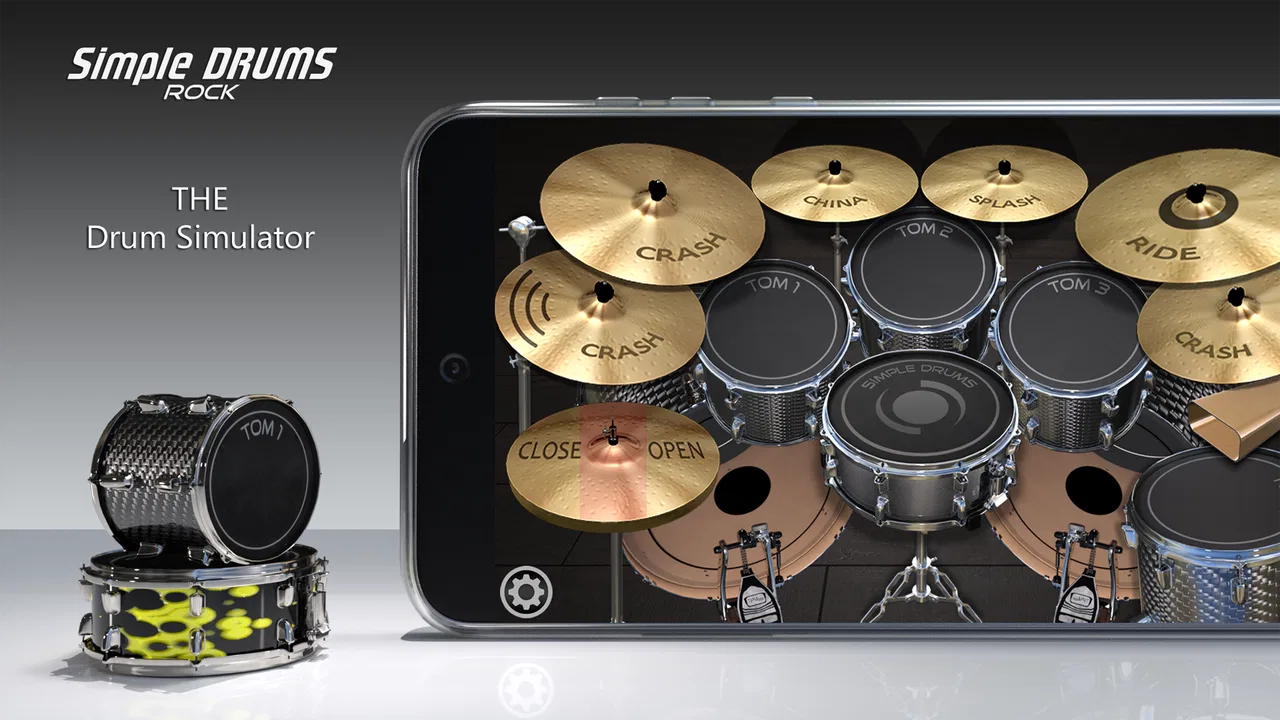
The most successful design decision is the lack of unnecessary distance between the player and the instrument. A drum simulator becomes frustrating when menus, instructions, or decorative elements dominate the screen. Here, the central appeal is the virtual kit itself. I can approach it casually, tap one piece at a time, or use both hands to create a more active pattern without first learning a complicated control scheme.
That simplicity makes the game friendly to people who have never played drums. A child can experiment with individual hits, while an experienced musician can use the same layout for a quick rhythm exercise. The Everyone age rating fits that welcoming character. It feels suitable for shared use as well: passing the phone to a friend and asking them to create a beat takes almost no explanation.
There is also a useful distinction between playing for fun and practicing seriously. For casual play, the direct touch controls are the main attraction. For practice, I would treat the app as a coordination aid rather than a complete training environment. It can encourage consistent timing and hand independence, but it cannot reproduce the physical rebound, resistance, volume, or body movement of a real kit. That difference matters if your goal is to prepare for a rehearsal or improve formal technique.
One practical tip is to begin with a deliberately small pattern instead of hitting everything at once. I found that alternating a steady pulse with a second accent gives the app more musical purpose than random tapping. Once that feels comfortable, adding another part becomes a simple test of timing. This turns a few idle minutes into a compact exercise in keeping one hand stable while the other changes the pattern.
A visual language that keeps the instrument in focus
The art direction is functional rather than theatrical. The virtual drum set provides the visual setting, and that setting communicates the purpose of the app immediately. I do not need a story, character, or elaborate stage to understand what I am supposed to do. The kit itself becomes the interface, the play space, and the source of the game’s identity.
That restraint helps the mood stay coherent. The experience feels like sitting down for an informal jam rather than entering a large progression-based game world. The absence of narrative pressure is a strength for short sessions. I can open it when I want a quick rhythmic distraction without feeling that I have abandoned a campaign or missed a daily objective.
The trade-off is that players looking for a richer visual journey may find the presentation limited. There is little reason to explore beyond the act of playing, so the atmosphere depends heavily on the responsiveness of the kit and the sound produced by each tap. In a music game, that is a reasonable priority, but it means the app will not satisfy someone who wants unlockable stages, a dramatic performance setting, or a visually evolving adventure.
I also think the uncluttered presentation makes the app more useful for experimentation. Because the kit remains the main focus, I can pay attention to spacing between hits rather than chasing visual effects. That is a small but meaningful advantage for beginners who are trying to understand why a beat sounds steady or why it falls apart when too many taps are added.
Sound gives the simple setting its character
The audio response is where a drum simulator either becomes playable or loses its appeal. In this case, the sounds provide the reason to keep returning after the novelty of tapping the screen has passed. Each interaction is meant to feel like a drum hit, and the immediate connection between finger movement and percussion gives the app its energy.
I found the sound design most convincing when I treated the kit as a rhythm instrument rather than a collection of buttons. A steady basic beat makes the response feel purposeful. Random taps can still be amusing, but they reveal the limits of any touch-based simulator: without timing and repetition, the experience quickly becomes noise. The app rewards a little discipline even though it never demands formal practice.
There is a useful everyday scenario here. Imagine waiting for a bus or taking a short break between tasks. You can spend that time tapping out a familiar rhythm, then try to repeat it without speeding up. That is more satisfying than simply pressing every part of the kit, and it gives the session a clear beginning and end. I would not call it a full lesson, but it is a convenient way to keep rhythm awareness active.
Another tip is to use the app to test an idea before reaching for a physical instrument. If a beat feels awkward when reduced to a few taps on the screen, it may need simplifying before you try it on a real kit. This is not a substitute for hearing a drummer play the pattern, but it can help separate a workable rhythmic idea from one that only sounds attractive in your head.
The sound also shapes the atmosphere more than the setting does. Since the visual world is intentionally compact, the audio has to make the kit feel lively enough to hold attention. That works for short bursts, though dedicated musicians may eventually want more control, a broader practice environment, or a more detailed recording workflow than a lightweight mobile game is designed to provide.
Mechanics that fit casual practice better than formal training
The core mechanic is easy to grasp: touch the virtual drum elements and build a beat. That simplicity is not a weakness by itself. It is what lets the game serve several kinds of users at once. A complete beginner gets an approachable introduction to drum coordination, while a casual player gets an interactive toy that is more engaging than passively listening to music.
Where the mechanics fit less well is advanced instruction. A serious learner usually needs a structured sequence, measurable progress, detailed feedback, and a clear way to compare one attempt with another. I would choose a dedicated drum-learning tool or a real electronic kit for that purpose. This app is better as a supplement: a place to rehearse a basic pattern mentally, explore a groove, or keep your hands active when no physical kit is available.
The touch interface also creates a specific trade-off. A phone screen is convenient and portable, but it gives less physical separation than a real drum setup. Several hits close together can require careful finger placement, and large hands may find extended play less comfortable. I recommend holding the device securely and starting with simple patterns before attempting fast combinations. That reduces accidental taps and makes the rhythm easier to hear.
For a more useful practice routine, I would divide a session into three stages. First, tap a slow, repeating pulse until it feels even. Next, add one contrasting hit while keeping the pulse unchanged. Finally, stop and repeat the pattern from memory. This workflow uses the app’s strongest quality—immediate response—without pretending that a phone can provide the full physical feedback of drums. It is a practical way to turn an open-ended simulator into a small personal exercise.
The free entry point is another reason the mechanics work for newcomers. I can try the central experience without committing money first. Optional purchases range from $0.99 to $1.49 per item, so anyone considering them should decide whether the added value matches the way they play. For a person who only wants occasional tapping, the free experience may be enough. Someone who returns often may view the optional items differently, but I would still test the basic interaction thoroughly before buying anything.
The current version is 1.9.6, and the app requires Android 6.0 or later. That makes it accessible on a wide range of devices, although the actual comfort of playing will depend more on screen size, touch response, and speaker quality than on the version number alone. A larger display can make two-handed tapping easier, while headphones or a good speaker can make the rhythm more enjoyable than a weak built-in audio system.
Who will enjoy it, and who should look elsewhere
I would recommend this game to beginners, rhythm fans, parents looking for a simple music activity, and drummers who want a lightweight way to sketch out a beat. It is also a good choice for someone who likes games that can be understood immediately and played in short sessions. The app does not ask me to memorize a complicated rule set, so its mood stays relaxed and playful.
I would be more cautious about recommending it to musicians seeking serious technique development. If you need realistic pedal control, nuanced dynamics, recording tools, guided lessons, or the physical response of mesh pads and cymbals, a dedicated alternative will serve you better. Likewise, if your ideal music game includes songs, scoring systems, visual lanes, and a strong sense of progression, this compact simulator may feel too open-ended.
Compared with rhythm games built around matching notes on a scrolling track, this app gives me more freedom but less structure. I decide what to play instead of following a fixed sequence. Compared with virtual instruments that aim for detailed production, it is quicker to access but less suited to composing a polished performance. Compared with a real drum kit, it is quieter, cheaper, and far more portable, while offering a much smaller range of physical expression.
That middle position is important. The game is not trying to win every comparison. Its strongest use is the space between a toy and a training tool: more interactive than a soundboard, less demanding than a real instrument, and easier to carry than either. Once I understood that, the design choices made more sense. The limited setting supports quick play, and the uncomplicated mechanics keep attention on rhythm.
My atmosphere verdict after regular short sessions
What stays with me is the consistency between the app’s art direction, sound, and pacing. The visual presentation says “pick up the kit and play,” the audio gives each tap a musical purpose, and the short-session structure avoids unnecessary pressure. Nothing feels like it belongs to a different kind of game. Even the limitations are connected to the same compact design: there is freedom to experiment, but not the depth of a full drum course or studio application.
I especially like the way it can change a passive moment into a small creative one. Instead of merely waiting, I can work on a beat. Instead of trying to remember a rhythm, I can tap it out. Those uses are modest, but they are genuine, and they explain why a simple drum simulator can remain appealing after the first few minutes.
There is still friction. Touch controls cannot fully imitate the feel of sticks, the phone may be awkward for fast two-handed work, and players who need goals may lose interest because the experience is centered on free play. The optional in-app purchases also deserve a moment of consideration rather than an automatic purchase. None of these issues ruins the app, but they define its audience clearly.
For me, the best way to use it is as a portable rhythm sketchpad, not as a replacement drum teacher. I would open it for a quick beat, a beginner-friendly experiment, or a short coordination routine. I would switch to a structured learning app, electronic kit, or physical drums when accuracy, technique, and long-term progress became the priority.
In that role, Simple Drums Rock - Drum Set is an enjoyable and approachable music game. Its free starting point, Everyone rating, and simple interaction make it easy to recommend to curious beginners, while its large install base and solid 4.2 average suggest that the format has broad appeal. Just keep expectations realistic: its charm comes from immediate tapping, compact atmosphere, and casual rhythm-making. If that is what you want, it creates a pleasant playable mood without getting in the way of the beat.
FAQs for Simple Drums Rock - Drum Set
01What is Simple Drums Rock - Drum Set?
Simple Drums Rock - Drum Set is a virtual drumming app that turns your Android or iOS device into an electronic drum kit. It lets you tap different drums and cymbals on the screen, practice rhythms, play along with music, and experiment with rock-style beats. The layout is designed to feel accessible for beginners while still offering enough responsiveness for casual practice and entertainment.
02Can beginners use Simple Drums Rock - Drum Set easily?
Yes. The app is relatively easy to understand because the main controls are presented as a drum kit on the screen, with each pad producing a different percussion sound when tapped. Beginners can start by playing individual drums and gradually build simple rhythms. However, users who want advanced lessons, detailed notation, or structured courses may find that the app focuses more on free playing than formal instruction.
03Does Simple Drums Rock - Drum Set work without an internet connection?
Many of the basic drumming functions can generally be used offline after the application and its required resources have been installed. This makes it useful for practicing during travel or when a connection is unavailable. Some additional features, advertisements, downloadable content, or music-related options may require internet access, so availability can depend on the version installed and the device platform.
04Can I play along with songs in Simple Drums Rock - Drum Set?
The app is intended to support an enjoyable play-along experience, allowing users to practice rock rhythms and drum patterns while listening to music or using available in-app options. The exact play-along tools can vary between versions, including whether background audio, playlists, or external music sources are supported. Users should check the current app description for the latest compatibility details.
05Is Simple Drums Rock - Drum Set free to download and safe to use?
Simple Drums Rock - Drum Set is typically available as a free download, although it may include advertising or optional purchases depending on the platform and version. As with any app, download it from the official Google Play Store or Apple App Store to reduce security risks. Before installing, review the listed permissions, privacy information, ratings, and recent user feedback, especially if you plan to make in-app purchases.
Pros
- Responsive pads make basic rhythms easy to play.
- Includes multiple drum kits for different musical styles.
- Loop and recording features support practice and experimentation.
- Works well for quick rhythm ideas without extra equipment.
- Simple layout is accessible for beginners and casual players.
Cons
- Advanced players may find the sound customization options limited.
- Some features or kits may require in-app purchases.
- Touch controls can feel cramped on smaller phone screens.
- Audio latency may vary depending on the device and headphones.
- Extended playing sessions can drain the battery noticeably.

Simple Drums Rock - Drum Set
Gallery